
Wellbeing, aesthetic integration and a new way of experiencing outdoor space
In recent years, outdoor space has ceased to be viewed as a mere complement to the home and has instead become a functional extension of it. In this context, built-in hot tubs for gardens and outdoor areas have gained prominence as a thoughtful and long-lasting alternative to the traditional swimming pool.
This is not a matter of fashion, but a coherent response to new priorities: genuine year-round use, physical and mental wellbeing, architectural integration, and a more conscious relationship with the domestic environment.
Navegación rápida
What is a built-in hot tub for outdoor use
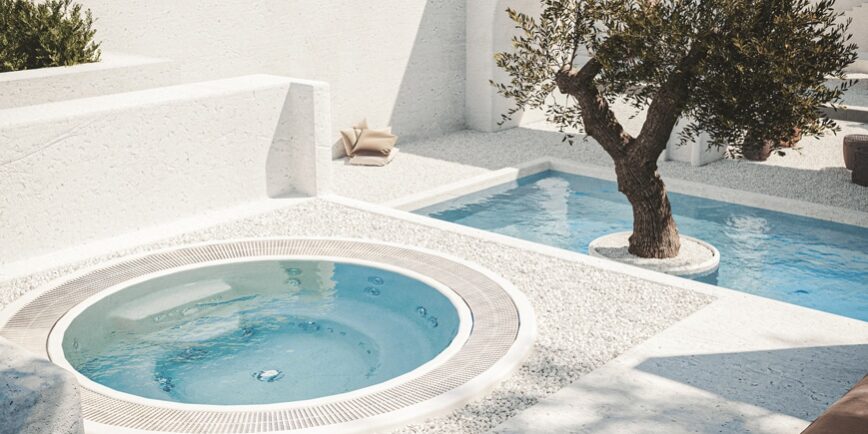
A built-in hot tub is an installation integrated into the ground or into a structural element of the garden, terrace or patio. Unlike portable or raised jacuzzis, it forms part of the spatial design from the outset, both aesthetically and functionally.
This integration allows for visual and spatial continuity, reducing the visual impact of the equipment and reinforcing a sense of order, calm and coherence throughout the garden.
Main advantages of built-in hot tubs
Aesthetic integration and architectural value
The defining characteristic of a built-in hot tub is its ability to blend seamlessly with its surroundings. It can be aligned with wooden decking, ceramic paving, natural stone or changes in ground level, creating a sense of continuity that is difficult to achieve with surface-mounted solutions.
Year-round use
Unlike swimming pools, whose use is typically limited to warmer months, built-in hot tubs are designed for continuous enjoyment. Heated water allows them to be used even in winter, offering an experience particularly appreciated in cold, quiet settings and in moments of thermal contrast.
Physical and mental benefits
Hydrotherapy has long been associated with muscle relaxation, improved circulation and stress reduction. Without requiring large dimensions or intensive use, a built-in hot tub encourages more frequent and sustained routines of rest and recovery.
More rational consumption and maintenance
The smaller water volume compared to a swimming pool results in lower overall consumption, as well as a significant reduction in chemical products and maintenance tasks. While care is still required, it is considerably more manageable over time.
Property value enhancement
A properly integrated built-in jacuzzi adds clear value to a property. It does not function as a mere accessory, but as a structural enhancement that reinforces perceptions of quality, design and wellbeing.
Comparison: built-in hot tub vs traditional swimming pool
| Aspect | Built-in hot tub | Traditional swimming pool |
|---|---|---|
| Annual use | All year round | Mainly seasonal |
| Space required | Reduced | Large |
| Water consumption | Low | High |
| Maintenance | Moderate | Demanding |
| Purpose of use | Wellbeing and relaxation | Leisure and physical activity |
| Aesthetic integration | Very high | Variable |
Motivations behind this choice
- The need to introduce genuine pauses into everyday life.
- The desire to enjoy the garden as an intimate space, not solely a social one.
- The pursuit of wellbeing without reliance on travel or schedules.
- The possibility of using outdoor spaces even during colder seasons.
- The sense of self-care associated with sustainable habits.
A decision focused on quality of life
Choosing a built-in hot tub for the garden or outdoor area is not an impulsive decision, but a reflection on how one wishes to inhabit domestic space. Compared to solutions intended for occasional use, a built-in hot tub offers continuity, discretion and a more conscious relationship with rest.
For those who prioritise design, wellbeing and everyday experience, a built-in hot tub does not replace the swimming pool: it proposes a different — and for many, deeper — way of enjoying the outdoors of the home.